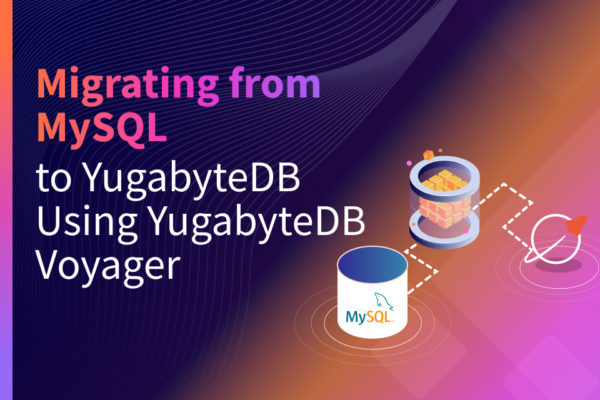

Migrating from MySQL to YugabyteDB Using YugabyteDB Voyager
See how easy it is to use YugabyteDB Voyager to migrate a web application from a MySQL database to a distributed YugabyteDB database cluster.

See how easy it is to use YugabyteDB Voyager to migrate a web application from a MySQL database to a distributed YugabyteDB database cluster.

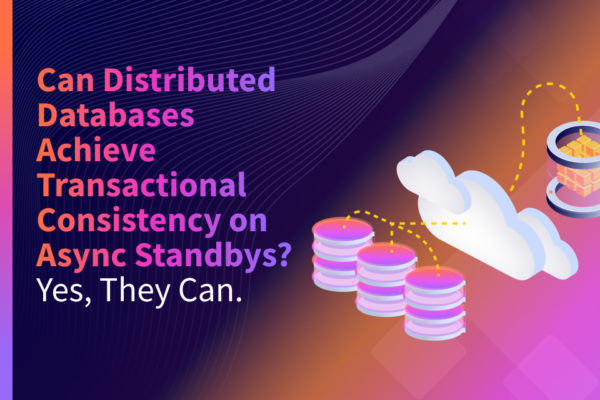
In this blog post, we will discuss how to maintain transactional read guarantees on an async standby configured through cross cluster replication. This feature has bearing on any user who runs a transactional application in a distributed setup. We think that may apply to many people reading this blog.

See how how easy it is to use YugabyteDB Voyager to migrate a Node.js application backed by a single-node PostgreSQL database to a distributed YugabyteDB database cluster.

This blog provides a guide to building Spring Boot applications with YugabyteDB using GraalVM’s ahead-of-time (AOT) compilation to generate a native image. The guide covers the necessary prerequisites and steps to trigger the native build, including how to handle dependencies lacking reachability metadata with explicit runtime hints.

Backend developers working with databases often rely on query builders and object-relational mappings (ORMs) to facilitate database interactions. In this blog, we’ll investigate how the Knex.js query builder can be used to enhance the development experience with Node.js and YugabyteDB.

There is now support for YugabyteDB in Testcontainers. This blog explores how to use Testcontainers to write integration tests for a Spring Boot application with the Yugabyte database.

Developing distributed, database-backed applications brings a number of performance considerations. Applications are being developed to run across zones and regions, potentially incurring high latency costs if incorrectly tuned. This blog will guide you towards a low latency future by using Node.js Smart Drivers.

In this blog, we will explore how to set up the metrics dashboards for YugabyteDB’s CDC operations and how to use them to monitor those operations. We will also explore the behavior of these metrics under various scenarios.

There are many ways to handle ID generation in PostgreSQL. In this blog, we’ll demonstrate four ways to do so in Sequelize for PostgreSQL and YugabyteDB.

In a previous blog, we developed an application-level sharding layout to avoid hotspots. With that layout in mind, where order is maintained within each shard, let’s discuss how to design a query to return data with pagination while maintaining the global ordering.